 DE
DE
 EN
EN



Right to Health
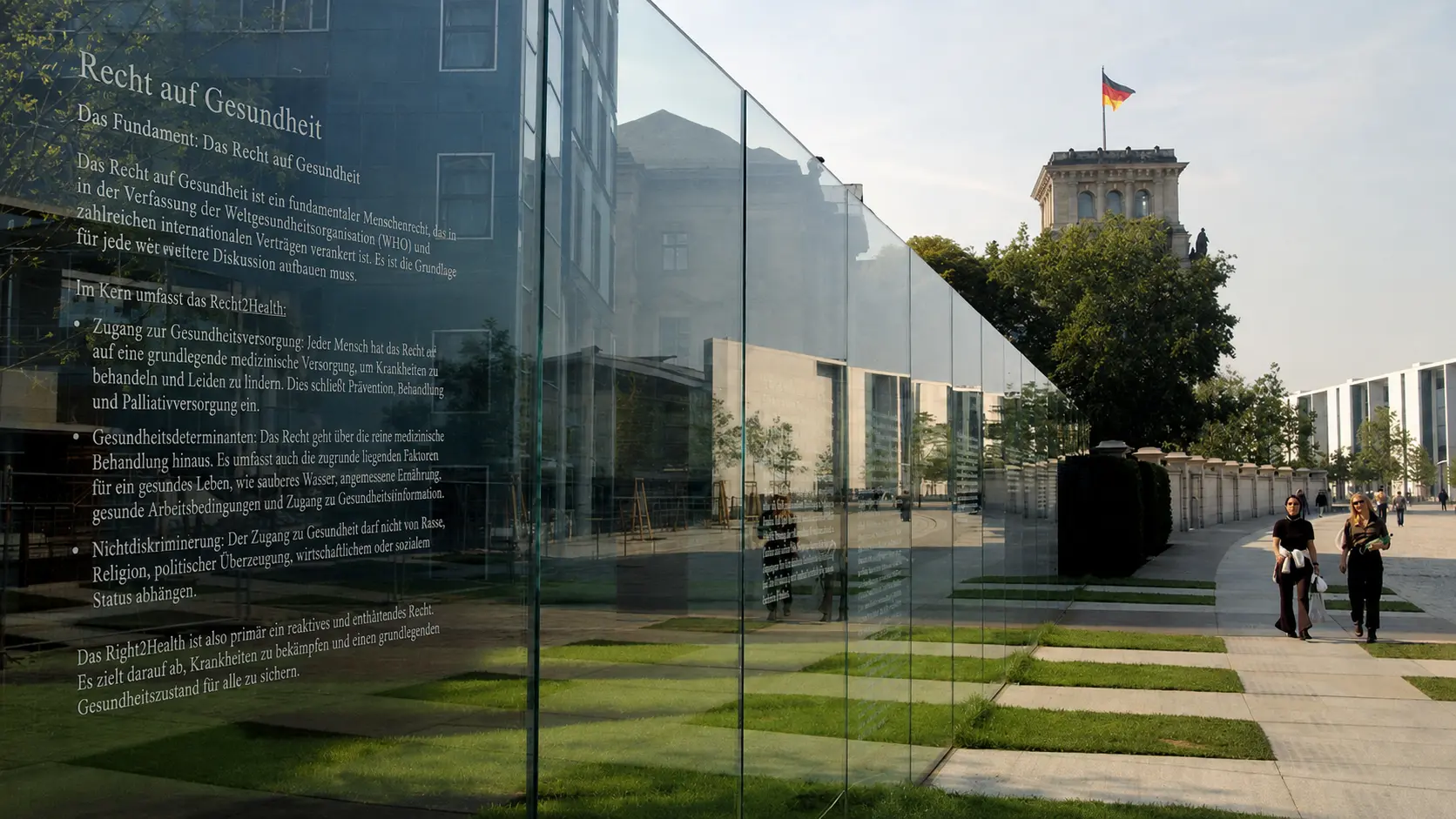
The Foundation: The Right to Health
The right to health is a fundamental human right enshrined in the Constitution of the World Health Organization (WHO) and numerous international treaties. It is the foundation upon which any further discussion must be built.
At its core, the Right2Health encompasses:
- Access to healthcare: Everyone has the right to basic medical care to treat illnesses and alleviate suffering. This includes prevention, treatment, and palliative care.
- Health determinants: The right goes beyond mere medical treatment. It also includes the underlying factors for a healthy life, such as clean water, adequate nutrition, healthy working conditions, and access to health information.
- Non-discrimination: Access to health must not depend on race, religion, political belief, economic, or social status.
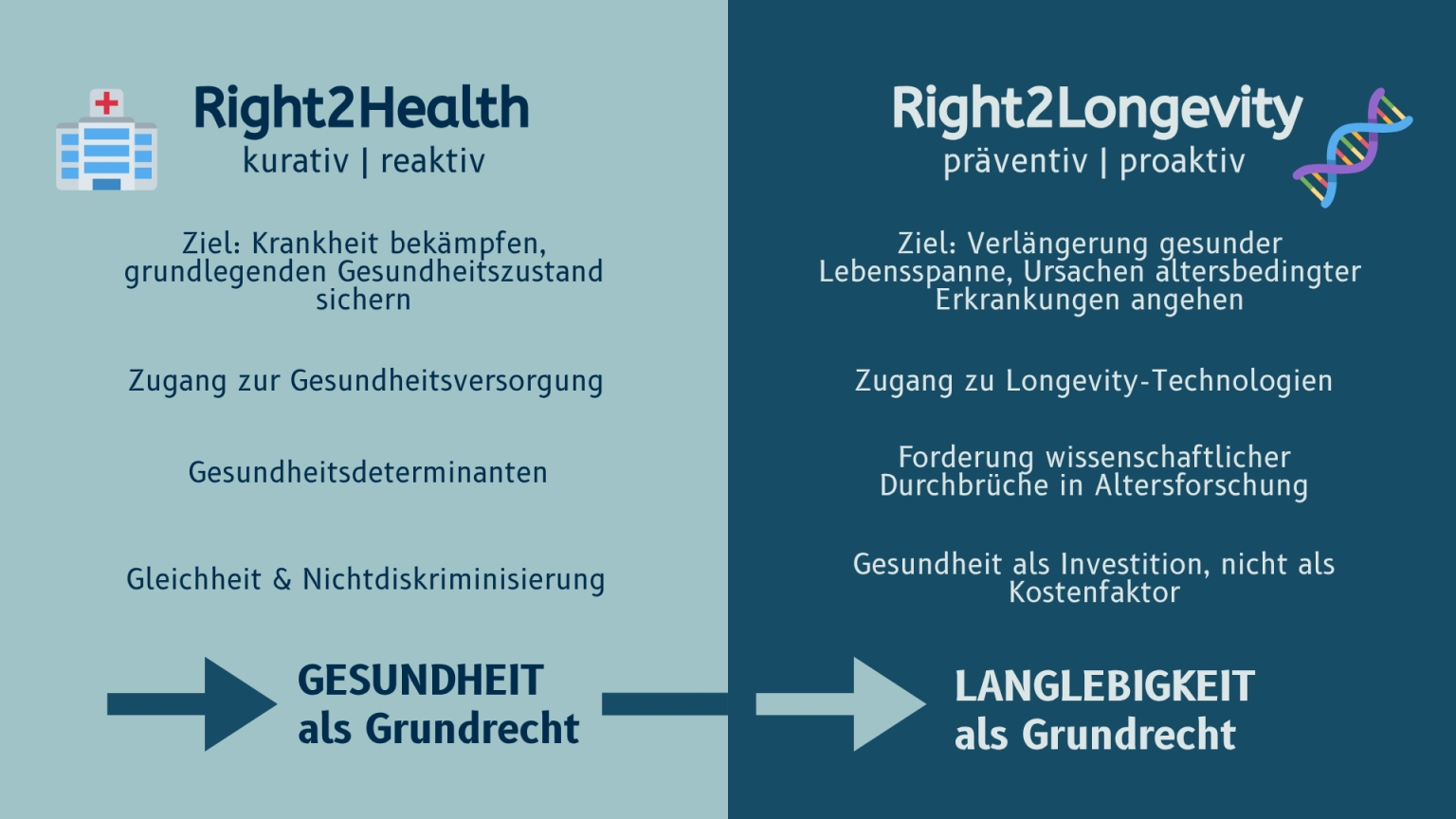
The Right2Health is therefore primarily a reactive and preserving right: it aims to combat diseases and secure a basic state of health for everyone.
The Evolution: The Right to Longevity (Right2Longevity)
The right to longevity is the logical and necessary evolution of the right to health in the 21st century. It argues that we should not be satisfied with merely treating diseases. Instead, we should proactively address the biological processes of aging themselves in order to extend the healthy lifespan (healthspan) for all people.
Right2Longevity expands the concept as follows:
- Preventative and Proactive: Instead of waiting for the onset of age-related diseases (cancer, dementia, heart disease), Right2Longevity aims to slow down or even reverse their common root cause—the aging process itself.
- Focus on Science: It demands the promotion of and equitable access to scientific breakthroughs in geroscience (aging research), regenerative medicine, and biotechnology.
- Health as an Investment: It views the extension of healthy years of life not as a cost factor, but as one of the greatest socioeconomic opportunities of our time, leading to greater productivity, less suffering, and more stable societies.
We argue that it is unethical to ignore the scientific tools available for combating aging. If we have the ability to prevent age-related suffering, we have a duty to do so.
Scientific feasibility.
Research shows that the aging process is not an inevitable fate, but a modifiable biological process.
The socioeconomic imperative: We refute the assumption that longevity will overburden social systems. Our models show that an extended healthspan drastically reduces healthcare costs and increases economic productivity.
Democratization of longevity: Equitable access. A central pillar of our argumentation is the democratization of longevity.
The Right2Health was a milestone of the 20th century. The Right2Longevity is the vision for the 21st century. It is the ambitious but achievable demand to enable every person not just to live a life free of disease, but to live the longest, healthiest, and most fulfilling life possible.