 DE
DE
 EN
EN




Public Health Index
The new Public Health Index (PHI) from the Federal Association of Local Health Insurance Funds (AOK-Bundesverband) and the German Cancer Research Center (DKFZ) reveals: Germany ranks 17th out of 18 countries in Northern and Central Europe in implementing scientifically recommended measures to promote healthy lifestyles.
These findings are alarming, but also present an opportunity for change in prevention policy.
Despite broad public support for health-promoting measures, prevention policy in Germany implements only a few of the evidence-based interventions.
What the Public Health Index measures
The PHI evaluates how well countries implement scientifically recommended measures in four key areas of action:
- Tobacco
- Alcohol
- Nutrition
- Physical activity
These four factors play a central role in approximately four out of ten deaths in Germany. They are major risk factors for chronic diseases such as cancer, type 2 diabetes, and cardiovascular diseases. The aforementioned diseases cost healthy years of life and place a massive financial and personnel burden on our system.
Germany's Record: Trailing Behind, Bottom of the Pack Everywhere
1. Tobacco – Germany Far Behind International Standards
The Tobacco Control Scale shows: Germany scores a mere 43 out of 100 points, falling significantly short of WHO recommendations.
- Tobacco tax is below the level recommended by the WHO
- Advertising is still permitted at the point of sale
- When it comes to non-smoker protection, many federal states still have exceptions
Countries like Ireland, the United Kingdom, France, or the Netherlands implement strict tobacco control policies—with smoke-free zones and comprehensive advertising restrictions. These measures are proven to reduce smoking rates.
Why this works for Webflow:
If you copy the text directly from the rendered output above (not the raw markdown code block, but the actual text with the headers and bullet points as you see them on your screen), your browser will copy it as modern HTML/Rich Text.
When you paste that into your Webflow CMS Rich Text field, Webflow will automatically recognize the headers, the bulleted list, and the paragraph breaks without stripping anything out.
2. Alcohol – Almost Anytime, Everywhere, Very Cheap
In the area of alcohol, Germany achieves only 9 out of 40 points—sharing the bottom of the scale with Austria.
- Alcohol is available almost anytime
- Alcohol is advertised
- In international comparisons, alcohol is very cheap in Germany
The Scandinavian countries show that there is another way: higher prices, limited availability, and clear protection for children and youth lead to less consumption and fewer alcohol-related illnesses and deaths.
3. Nutrition – Barely Any Use of the Most Effective Tools
None of the six recommended measures have been implemented nationwide in Germany. Missing elements include:
- Mandatory quality standards for school meals
- Rules for snack and beverage options at schools
- Taxes on heavily sugared soft drinks
- Effective regulations for child protection in food advertising
Other countries show that mandatory standards for school catering and taxes on soft drinks in particular have significant effects on health and consumption behavior, especially when they are part of a comprehensive mix of measures.
4. Physical Activity – Lower Midfield with Potential
In the area of physical activity, Germany only reaches the lower midfield. However, physical activity does not primarily arise from isolated health programs, but rather from an environment that makes everyday movement easy—for example, through safe pedestrian and bicycle paths, activity-friendly cities and schools, as well as traffic planning that promotes active mobility.
Structures Instead of Blame: Health is Political
In public debate, the responsibility for health is often passed onto the individual: "You just need to exercise more," "eat better," "drink less," or "finally pull yourself together and quit smoking."
This overlooks the fact that structural frameworks largely determine how easy or difficult it is for an individual to live a healthy life:
- How expensive are cigarettes and alcohol compared to healthy food?
- Is healthy nutrition the standard in schools?
- Is there advertising for unhealthy products—especially advertising aimed at children?
- Is it safe and practical for everyday life to travel on foot or by bicycle?
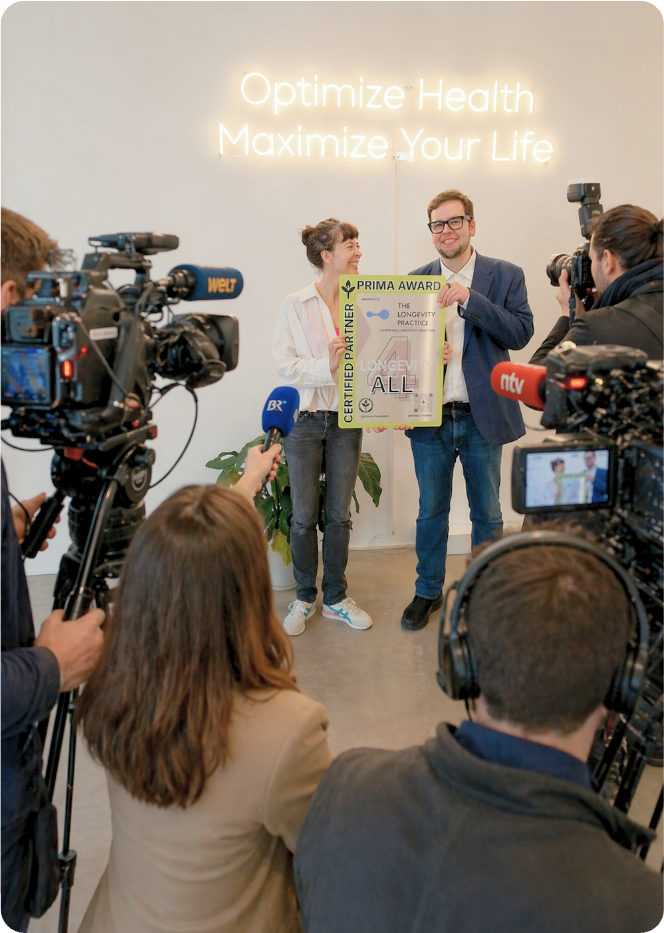
As the PRIMA Longevity Institute, we emphasize:Longevity and healthy years of life are not purely a question of individual willpower—they are a result of political decisions.
Why Is So Little Happening – Despite the Evidence?
There is already clear evidence regarding which health policy measures are effective. Nevertheless, many countries—and Germany in particular—lag behind in implementation.An analysis in The Lancet describes the cause as a combination of:
- A lack of political will
- Strong influence from lobbying groups
- An insufficient use of scientific evidence
The striking fact: Many of the most effective measures (e.g., higher taxes on tobacco and alcohol, restrictions on advertising for unhealthy products, VAT exemption for healthy foods) are indeed supported by the population. Yet, little political progress is made.
What We Demand from a Prevention and Longevity Perspective
The PHI shows: Germany lacks a strategic compass and is squandering its prevention opportunities. We therefore call for a fundamental policy shift. Complementing the 4 areas of the PHI, we need to adopt a longevity perspective, as healthy aging begins decades before illness strikes:
1. National Prevention and Longevity Plan 2035
- a national prevention and longevity target system with measurable indicators (smoking rate, overweight, physical activity rate, disease-free lifespan, epigenetic age).
- a legal framework, similar to the Climate Protection Act, which legally mandates ministries to implement it.
2. WHO-compliant tobacco and alcohol policy within 24 months
The scientific evidence is known. It just needs to be implemented.
3. Make healthy eating easier
- mandatory standards for childcare and school meals
- Taxes on high-sugar soft drinks
- VAT exemption for fruit, vegetables, legumes
- Protecting minors from aggressive marketing of unhealthy foods
4. Enable physical activity structurally
- Investments in safe and continuous bike and pedestrian paths
- activity-friendly schools and community environments
- Health impact assessment ("Health in All Policies") in transport and urban planning
5. Introducing a "Healthy Aging Score" from age 40
A nationwide screening program for cardiometabolic risks, muscle strength, inflammation markers, and functional as well as epigenetic age.
6th National Research Mission "Longevity & Disease Delay"
- Goal: Delay disease onset, extend healthy life years, relieve strain on healthcare
We must not let this opportunity slip away
The Public Health Index clearly shows:
Germany is far from utilizing its prevention potential – and pays for it with lost life years and lost healthy life years. According to the OECD, in Germany nearly 190,000 deaths per year could be avoided.
Especially against the backdrop of growing pressure on the healthcare and social system , this is politically and socially short-sighted.
As the PRIMA Longevity Institute, we want to help ensure that these findings do not get lost among other topics, but rather become a starting point for concrete change.
Healthy living must be made the easy choice through evidence-based frameworks.
The PHI provides the data, international role models provide the best practices. What is missing now is primarily one thing: political determination.
Sources: